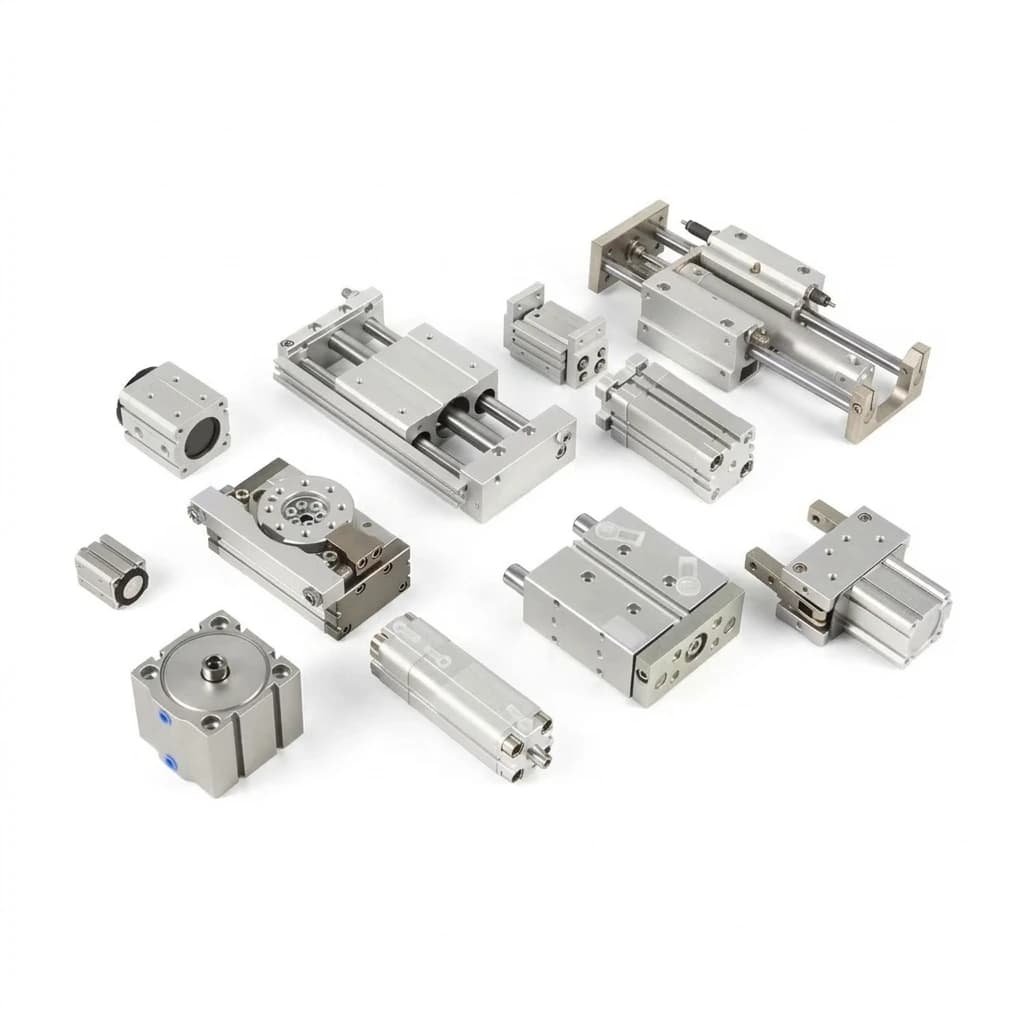
Replacing Pneumatic Vacuum Grippers with Electro-Permanent Magnets: A TCO and Energy Guide
Use this guide to compare electro-permanent magnetic grippers vs pneumatic vacuum EOAT for TCO, energy use, payback assumptions, safety limits, and RFQ validation.
The shift toward sustainable manufacturing and the rising costs of utility power are forcing automation engineers and procurement teams to rethink End-of-Arm Tooling (EOAT). For decades, pneumatic vacuum systems have been the default choice for automated material handling. They are cheap to buy, easy to understand, and highly versatile. However, their reliance on continuous compressed air makes them one of the most hidden sources of energy waste in a modern production facility.
When handling ferromagnetic materials—such as carbon steel blanks, stamped automotive parts, or heavy forgings—Electro-Permanent Magnetic (EPM) grippers present a compelling alternative. EPM technology eliminates the need for air hoses, vacuum generators, and continuous power draw, drastically altering the Total Cost of Ownership (TCO) equation over a robot's lifecycle.
This guide provides a comprehensive framework for evaluating the transition from pneumatic vacuum grippers to electro-permanent magnetic solutions, highlighting strict application boundaries, energy economics, and critical procurement criteria.
Updated: June 24, 2026. Scope: This is a screening and RFQ-preparation guide for ferromagnetic workpieces in industrial robot or cobot cells. It is not a machine-safety certification, magnetic force guarantee, or substitute for application testing with the real part geometry, surface condition, acceleration profile, and robot payload model.
1. The True Cost of Compressed Air in Automation
To understand the value of EPM technology, buyers must first quantify the true cost of pneumatics. Compressed air is notoriously inefficient and is treated by the U.S. Department of Energy as a major industrial energy system. In plants with large air networks, vacuum gripping OPEX depends less on the cup price and more on compressor efficiency, leaks, pressure setpoint, operating hours, and the duty cycle of the vacuum generator.
The inefficiencies stem from multiple sources:
- Generation Losses: Compressors convert electrical input into air pressure with substantial heat and system losses before the vacuum generator sees useful flow.
- Network Leakage: Air leaks in valves, fittings, and degraded hoses can turn a cheap vacuum cup array into a continuous utility load.
- Continuous Draw: Venturi vacuum generators require a constant flow of compressed air to maintain the vacuum grip on a part. If the robot pauses, the air keeps flowing.
When procurement teams evaluate a $500 pneumatic vacuum array against a $3,000 magnetic gripper system, they are often looking only at Capital Expenditure (CAPEX). Operating Expenditure (OPEX) tells a vastly different story. The ongoing costs of electricity for the compressor, routine maintenance of filters and lubricators, and downtime from degraded vacuum cups quickly eclipse the initial purchase price savings.
2. How Electro-Permanent Magnetic (EPM) Grippers Change the Math
Electro-permanent magnets use a fundamentally different physical principle than both standard electromagnets and pneumatic systems. An EPM relies on two distinct magnetic materials—typically Neodymium (NdFeB) and Aluminum-Nickel-Cobalt (AlNiCo).
A short electrical pulse alters the polarity of the AlNiCo magnet.
- In the magnetized (ON) state, the magnetic fields of the two materials align, driving magnetic flux outward into the workpiece to secure the grip.
- In the demagnetized (OFF) state, the fields oppose and internally cancel each other out, releasing the workpiece.
The critical energy advantage: Electrical power is required at the magnet during the switching phase, which is usually a short pulse rather than a continuous hold current. Once the part is gripped, the holding force is maintained by permanent magnets; the controller may still draw standby power, so buyers should request the controller standby wattage, pulse energy, and cycle assumptions from each vendor. Furthermore, because there are no moving diaphragms or suction cups to wear out, the maintenance interval can stretch from weeks for vacuum cups in harsh environments to much longer inspection intervals for magnetic poles and cables.
Energy Consumption Profile
Below is a schematic representation of the energy draw across a standard 10-second pick-and-place cycle.
3. Direct TCO Comparison: EPM vs. Pneumatic Vacuum
To facilitate objective vendor evaluation, procurement teams should use the following comparison matrix when auditing a new cell deployment.
| Evaluation Metric | Pneumatic Vacuum Gripper | Electro-Permanent Magnetic (EPM) Gripper | Advantage |
|---|---|---|---|
| Initial CAPEX (Hardware) | Low (Cups, hoses, ejector valves) | High (Magnetic modules, smart controller) | Pneumatic |
| Energy Consumption (OPEX) | High (Continuous compressed air demand) | Low (Switching pulses; no continuous magnet hold power, but verify controller standby draw) | EPM |
| Fail-Safe Security | Poor (Drops part upon air pressure loss) | Excellent (Permanent magnetic grip without power) | EPM |
| Maintenance Frequency | High (Replace torn cups, clear clogged filters) | Minimal (No moving parts, occasional surface cleaning) | EPM |
| Infrastructure Required | Factory air lines, compressors, FRL units | Standard 24V DC / 230V AC electrical integration | EPM |
| Tool Payload / Weight | Very Light (Ideal for lightweight cobot arms) | Heavy (Requires rigorous payload margin analysis) | Pneumatic |
| Material Flexibility | High (Glass, plastic, aluminum, steel) | Strict (Ferromagnetic steel and iron only) | Pneumatic |
| Surface Condition Tolerance | Moderate (Struggles with oil, severe scale, holes) | Excellent (Can grip through light oil, ignores holes) | EPM |
In a high-volume, multi-shift production environment, a 12 to 18 month payback can be plausible when compressed air is costly, leakage is unmanaged, and vacuum cup maintenance causes measurable downtime. Treat that range as a screening hypothesis, not a guarantee: calculate payback from local electricity price, compressor specific power, leak rate, annual operating hours, cup replacement frequency, downtime cost, and the confirmed standby/pulse data of the EPM controller.
4. Application Boundaries: When NOT to Replace Pneumatics
Magnetic gripping is powerful, but it is not a universal solution. Procurement and engineering teams must respect strict application boundaries to avoid failed deployments. Do not specify an EPM gripper if your process involves any of the following constraints:
- Non-Ferrous Workpieces: EPMs will not work on aluminum, brass, copper, carbon fiber, plastic, or austenitic stainless steel (like 304 or 316 series, depending on cold working).
- Ultra-Thin Steel (Under 2mm): While EPMs can handle thin sheets, the magnetic flux may penetrate completely through the first sheet and attract the second sheet beneath it (double-sheet picking). Specialized shallow-field pole layouts are required, and vacuum might be safer for ultra-thin stacks.
- Severe Surface Curvature: EPM modules require flush contact with the steel surface to maximize holding force. If the part has aggressive, unpredictable contours, adaptive silicone vacuum cups or mechanical jaws may provide better reliability.
- Strict Payload Limits on Small Cobots: If you are using a cobot with a strict 3kg to 5kg payload limit, the inherent weight of an EPM module and its mounting hardware might consume too much of the allowable budget, leaving insufficient margin for the workpiece itself.
5. Procurement & Engineering Transition Checklist
When converting an existing pneumatic cell to an electro-permanent magnetic solution, project managers should follow this validation checklist to ensure a smooth transition:
- Verify Workpiece Material Grade: Confirm that the exact grade of steel being handled is sufficiently ferromagnetic. Obtain material data sheets.
- Conduct Payload Analysis: Add the weight of the proposed EPM module, the custom adapter plate, the cables, and the heaviest workpiece. Ensure the total load, including dynamic acceleration forces, remains within the robot's safe operating limits.
- Map the Pickup Zone: Identify a flat, consistent area on the workpiece where the magnetic poles can achieve maximum contact, free from large bolt holes or complex raised geometries.
- Evaluate Residual Magnetism Risks: Determine if the workpiece requires downstream processes (like high-precision TIG welding or electron beam machining) that could be disrupted by residual magnetism. If so, specify a controller with an advanced demagnetization routine.
- Review Controller Integration: Ensure the EPM controller supports the required industrial protocols (PROFINET, EtherNet/IP, EtherCAT, or simple digital I/O) to interface cleanly with the robot PLC.
- Plan Cable Management: Route the electrical cables securely. Unlike flexible polyurethane air hoses, power cables for magnets must be protected from extreme flexing and sharp edges to prevent shorts.
- Request Sample Validation: Before issuing a PO, send sample workpieces to the gripper manufacturer to confirm actual holding force, shear resistance, and release cleanly.
6. Safety, Compliance, and Drop Prevention
One of the most compelling arguments for EPM technology in modern factories is safety compliance, particularly under ISO 15066 (Cobot Safety) and general industrial safety directives.
A pneumatic vacuum system is fundamentally vulnerable to infrastructure failure. If a compressor trips, an airline ruptures, or the factory loses main power, the vacuum decays rapidly. The robot will drop the workpiece, potentially causing severe injury to personnel or destroying expensive CNC machinery. Some vacuum systems use check valves to delay the drop, but the holding force still degrades over time.
An electro-permanent magnetic gripper is inherently fail-safe only within its verified application envelope. Once the workpiece is gripped, the holding force is maintained by permanent magnets and no continuous magnet power is required to hold the part. In the event of a total facility blackout, the robot may stop, but a correctly sized EPM gripper should continue holding the rated ferromagnetic load until power is restored and an explicit "demagnetize" command is sent from the PLC. The buyer still has to validate shear load, acceleration, pole contact, surface contamination, residual magnetism, and mechanical guarding before signing off the cell.
7. Meeting ISO 50001 Energy Goals
Many tier-one automotive suppliers and large-scale fabricators are adopting ISO 50001 energy management systems. This standard requires companies to continually improve energy performance and reduce greenhouse gas emissions.
Transitioning EOAT from pneumatic to electric can support these ESG (Environmental, Social, and Governance) targets when compressed air is a Significant Energy Use (SEU) in the facility. For audit-ready reporting, record the baseline air demand of the vacuum circuit, the post-conversion electrical pulse and standby data, and the operating schedule used in the savings calculation.
Frequently Asked Questions
Can one EPM gripper handle multiple different parts?
Yes, provided the different parts share a common, flat gripping zone that aligns with the magnetic pole layout. EPMs are highly adaptable to changing geometries as long as sufficient surface area is available.
How do EPM grippers handle parts covered in oil or machining coolant?
Unlike vacuum cups, which can slip or suck harmful fluids into the ejector valves, magnetic fields penetrate directly through thin layers of oil, water, and cutting fluids without loss of grip or damage to the internal components.
What is the typical lifespan of an EPM gripper?
Because there are no internal moving parts, seals, or diaphragms, an EPM gripper can easily last for millions of cycles. The limiting factor is usually the physical wear on the steel contact poles, which can often be re-machined or replaced after several years of heavy abrasion.
Conclusion and Next Steps
The decision to migrate from pneumatic vacuum to electro-permanent magnetic grippers is a strategic transition from high-OPEX, infrastructure-heavy tooling to low-OPEX, solid-state reliability. While the initial investment is higher, the compounding benefits of zero compressed air usage, eliminated maintenance downtime, and inherent fail-safe security make EPMs the optimal choice for heavy, ferromagnetic material handling.
Before committing to a specific tooling strategy, validate your assumptions with real-world testing. Send your heaviest, most complex steel parts for application engineering review to ensure that the holding forces, shear loads, and release characteristics meet your production requirements.
For project-specific evaluations, review our Sample Validation Quality Control procedures or contact our engineering team to calculate the exact ROI for your facility.
Sources & References
- How to Optimize Electropermanent Magnet for Robotic Grippers - PatSnap Engineering Analysis.
- New magnetic E-gripper requires no compressed air - Goudsmit Magnetics.
- Compressed Air Systems - U.S. Department of Energy industrial compressed-air resource.
- EOAT Gripper Made of Electro-permanent Magnets - HVR MAG technical literature on magnetic EOAT applications.
- ISO 50001:2018 - Energy management systems - International Organization for Standardization.
Author

Categories
More Posts
High-Temperature Magnetic Grippers: Sizing and Procurement for Hot Forging
High-temperature magnetic grippers sizing guide for hot forging: compare EPM safety, payload derating, duty cycles, cooling options, and RFQ inputs for buyers.
Magnetic Gripper Residual Magnetism and Demagnetization
Guide for engineers and buyers on why parts stick to magnetic grippers, how active demagnetization works, and how to define release acceptance criteria.
Safety Compliance and Fail-Safe Mechanisms in Magnetic EOAT: ISO 10218-2 and PL Buyer's Guide
A buyer's guide for procurement and engineering teams specifying fail-safe electro-permanent magnetic grippers against ISO 10218-2 and ISO 13849-1 expectations.