Magnetic Grippers
Start inquiry
Magnetic Grippers
WhatsApp
Magnetic Grippers

China-based magnetic gripper factory supporting OEM customization, sample validation, and export-ready automation projects.

Inquiry Email

[email protected]

Email app

Include workpiece details, target holding force, quantity, and destination.

Instant Chat

+86 18857971991

Chat on WhatsApp

Direct RFQ discussion with our sales engineering team.

Products
  • Electro-Permanent Magnetic Gripper
  • Magnetic EOAT
  • Robot Magnetic Gripper
Solutions
  • Sheet Metal Handling
  • Robot Pick-and-Place
  • Palletizing and Depalletizing
OEM Capabilities
  • Holding Force Review
  • Robot Mounting Interface
  • Sample Validation
Resources
  • Buyer Resources
  • Cobot Gripper Guide
  • ABB Gripper Guide
  • Blog
Company
  • About
  • Factory Network
  • Contact / RFQ
  • LinkedIn - Jimmy Su
Legal
  • Privacy Policy
  • Cookie Policy
  • Terms of Service
© 2026 Magnetic Grippers. All Rights Reserved.|China-based magnetic gripper manufacturing and OEM supply.
← Back to Resourcescobot gripper

Cobot Gripper Selection Guide for Magnetic EOAT

A practical guide for deciding when a magnetic cobot gripper fits ferromagnetic part handling, what to validate before quotation, and what to send for OEM review.

Buyer Intent:Commercial investigation: compare gripper types, check cobot compatibility, and prepare an RFQ for a collaborative robot handling cell.
gripper cobotcobot gripper kitcustom cobot grippercollaborative robot gripper
Email RFQWhatsApp +86 18857971991
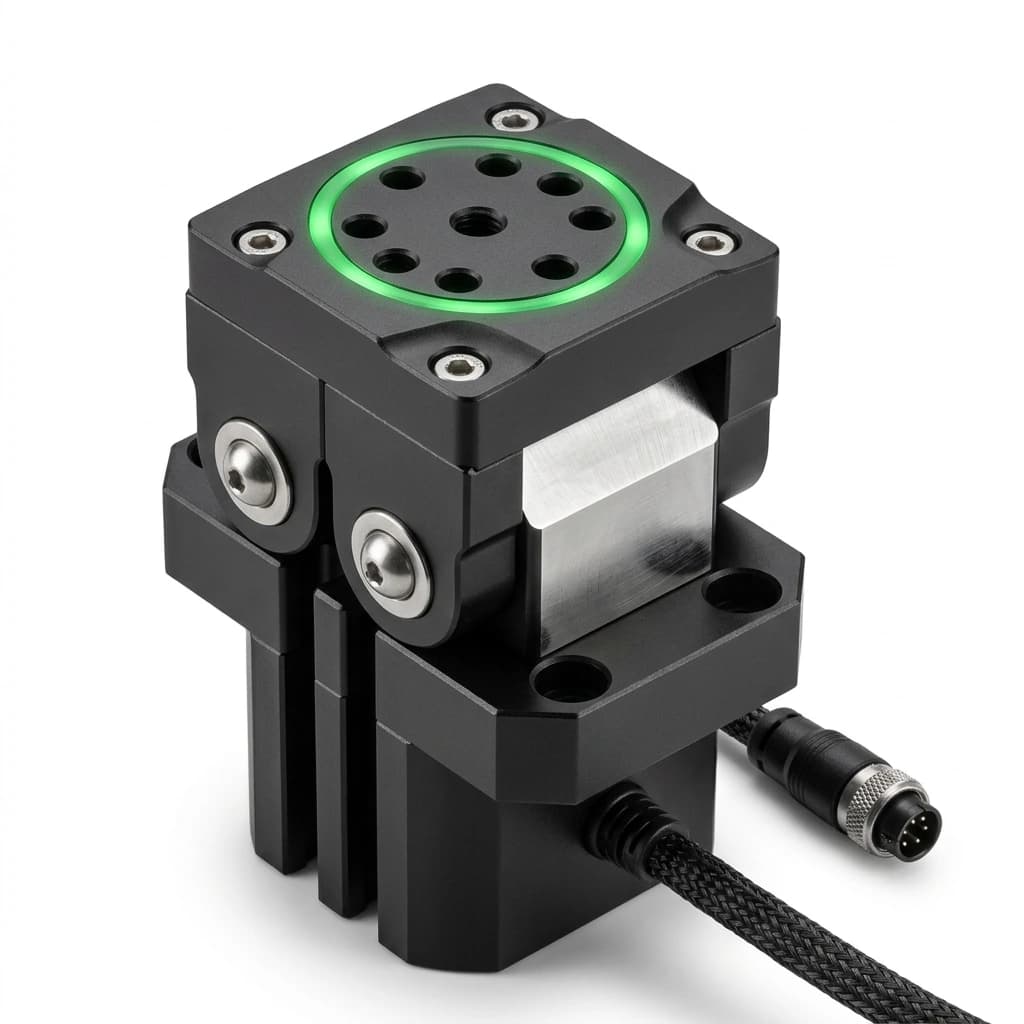
Compact magnetic gripper tooling for cobot handling

When Magnetic Fits

  • Steel or ferromagnetic workpieces with enough contact area for reliable magnetic holding.
  • Flat, repeatable pickup surfaces where vacuum cups slip, mark, or lose seal.
  • Small-batch or flexible cells where a compact EOAT layout helps preserve cobot payload.
  • Applications where custom pole layout, adapter plate, cable, and connector planning are acceptable.

When to Avoid It

  • Aluminum, stainless grades with weak magnetic response, plastics, cardboard, or soft goods.
  • Highly curved, oily, coated, burred, or uneven pickup surfaces without sample validation.
  • Workpieces that require positive mechanical capture through every safety scenario.
  • Cells where any power-loss, collision, or release risk cannot be mitigated by process design.

Selection Matrix

CriteriaMagnetic Gripper FitWhen to Avoid
Workpiece materialCarbon steel or other ferromagnetic materials with predictable pickup surfaces.Non-magnetic metals, plastics, mixed materials, or unknown alloys without sample testing.
Payload marginFull EOAT mass plus workpiece stays inside the cobot payload and moment envelope.The gripper, adapter, cables, and part consume the payload margin before motion is considered.
Surface conditionClean, repeatable contact area with controlled coating, burr, oil, and air-gap assumptions.Surface variation changes pickup or release enough to require a different gripping method.
Integration scopeThe project can define flange, adapter plate, cable route, controller signal, and release confirmation.The buyer needs an off-the-shelf plug-in kit with no mechanical or electrical review.

RFQ Inputs to Prepare

  1. Cobot brand, model, payload class, flange, and available tool I/O.
  2. Workpiece material, dimensions, thickness, weight, coating, oil, burrs, and pickup orientation.
  3. Cycle target, motion profile, placement tolerance, release time expectation, and duty pattern.
  4. Target holding force or internal safety factor, plus any drop-prevention or guarding requirement.
  5. Quantity, project stage, destination country, and whether OEM adapter, cable, or connector work is needed.
  6. Photos, drawings, failed gripper examples, and sample availability for validation.
Validation Sequence

1. Confirm magnetic fit before sizing

Check material response, contact area, surface condition, air gap, and workpiece thickness before assuming a holding-force value.

2. Review cobot payload as a complete tool

Include gripper, adapter plate, cable protection, fittings, workpiece, and center of gravity in the payload and moment check.

3. Validate pickup and release on real parts

Use representative samples to confirm residual magnetism, release timing, placement repeatability, and stacked-part behavior.

4. Freeze the OEM interface after sample review

Finalize mounting, connector, controller, packaging, and quality-control notes only after the sample test criteria are clear.

Reference Visuals

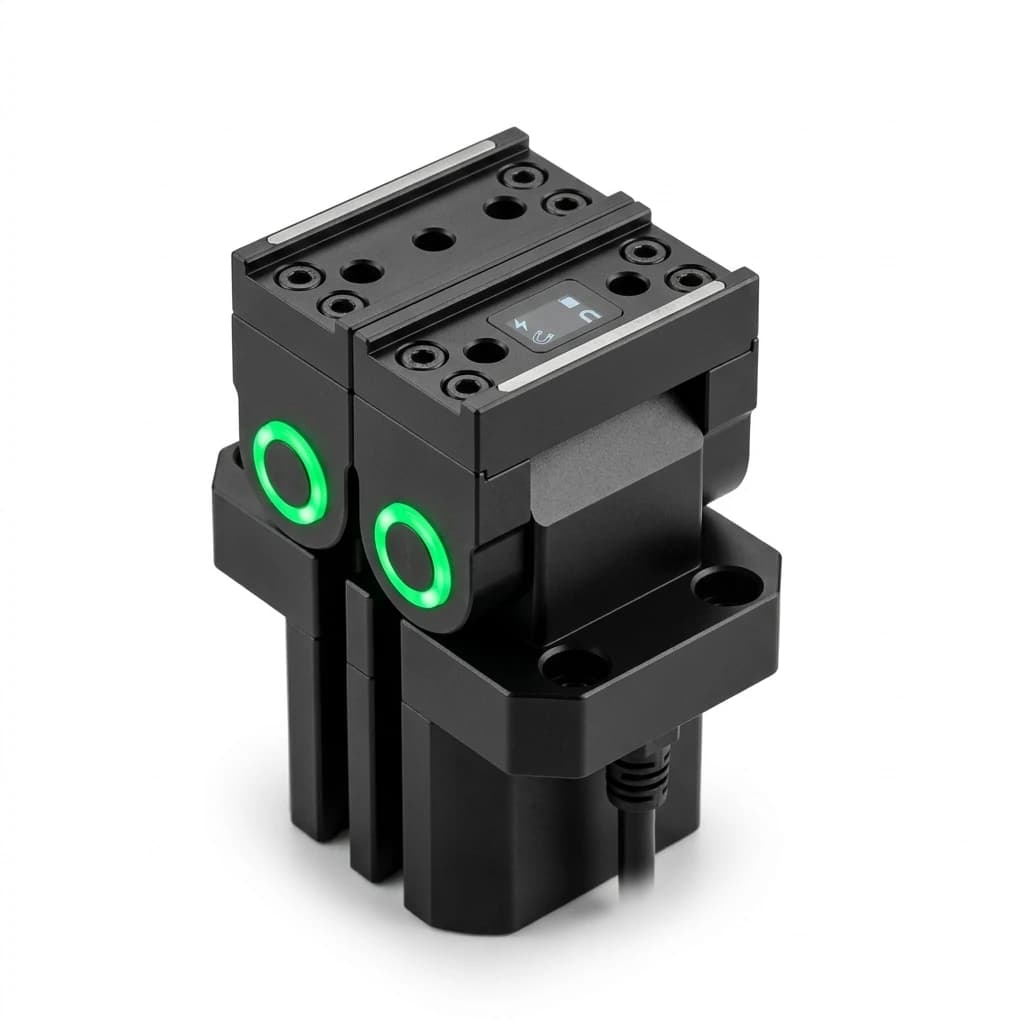
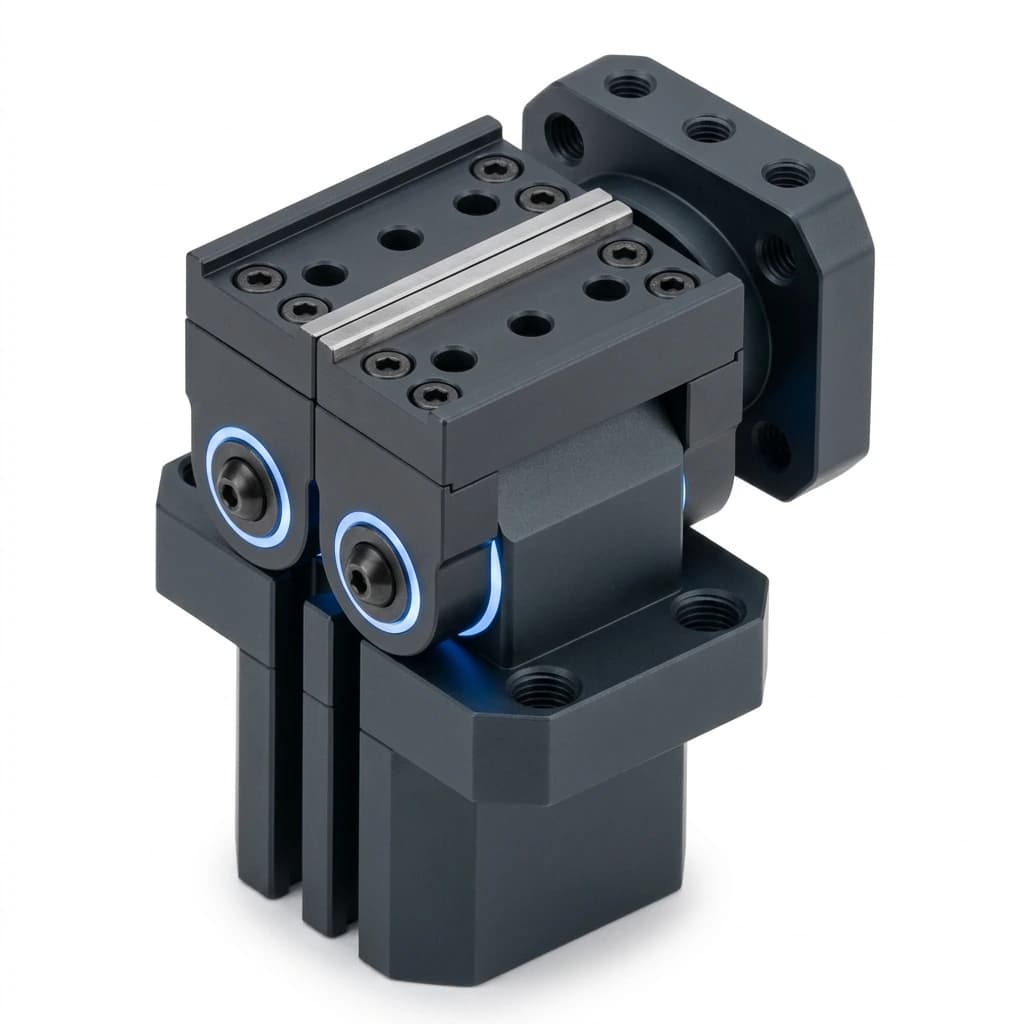
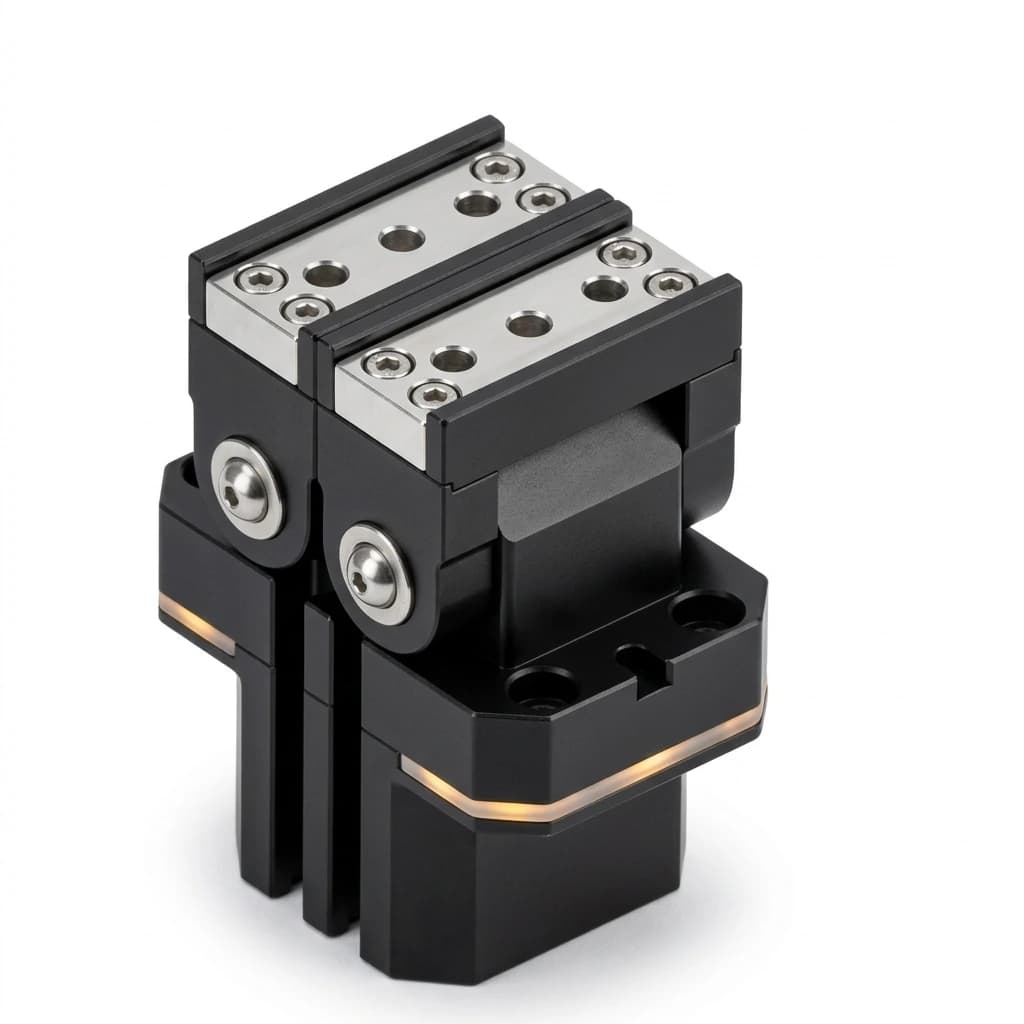
Product images show compact magnetic EOAT examples from the local Magnetic Grippers asset library. Final tooling shape is determined by workpiece review and OEM interface requirements.

Cobot magnetic gripper module with compact tooling layout
Compact magnetic gripper for cobot handling
Custom magnetic EOAT integration for robot cells

Risk and Trust Notes

  • Holding force is application-dependent; final selection requires engineering review of the real workpiece.
  • Robot and cobot compatibility depends on payload, moment, flange, cable route, and control signals, not only gripper size.
  • Magnetic gripping should be validated against process risks such as unexpected release, residual magnetism, collision, and operator interaction.

Source Pattern Reviewed

  • Robotiq gripper pages emphasize plug-and-play cobot integration, payload, and task fit.
  • OnRobot positions grippers by application, payload, quick-change, and collaborative robot deployment.
  • SMC lists magnetic grippers for collaborative robots as alternatives to vacuum cups or grippers for metallic workpieces.
  • Universal Robots explains gripper categories and the role of end effectors in cobot applications.

Buyer FAQ

Is a magnetic cobot gripper safe for every steel part?

No. Magnetic holding depends on material, contact area, air gap, thickness, surface condition, motion, and safety factor. Treat catalog force as a starting point and validate with real samples.

Can magnetic grippers replace vacuum cups on a cobot?

Sometimes. Magnetic grippers can help when vacuum cups lose seal on ferromagnetic parts, but they are not suitable for non-magnetic materials or surfaces that prevent stable magnetic contact.

What makes a cobot gripper different from an industrial robot gripper?

Cobot cells usually have tighter payload margins, simpler setup expectations, and more operator interaction assumptions. The full EOAT mass, cable route, flange, and risk controls need closer review.

Can you make a custom cobot gripper kit?

Yes. We can review the magnetic module, mounting plate, cable and connector requirements, controller signal, sample validation plan, and export packaging for OEM or integrator projects.

Related Pages

  • Cobot Magnetic Gripper
  • Cobot Handling
  • Robot Mounting Interface
  • Control Cable Connector Customization
  • Contact / RFQ

Inquiry Email

[email protected]

Email app

Include workpiece details, target holding force, quantity, and destination.

Instant Chat

+86 18857971991

Chat on WhatsApp

Direct RFQ discussion with our sales engineering team.