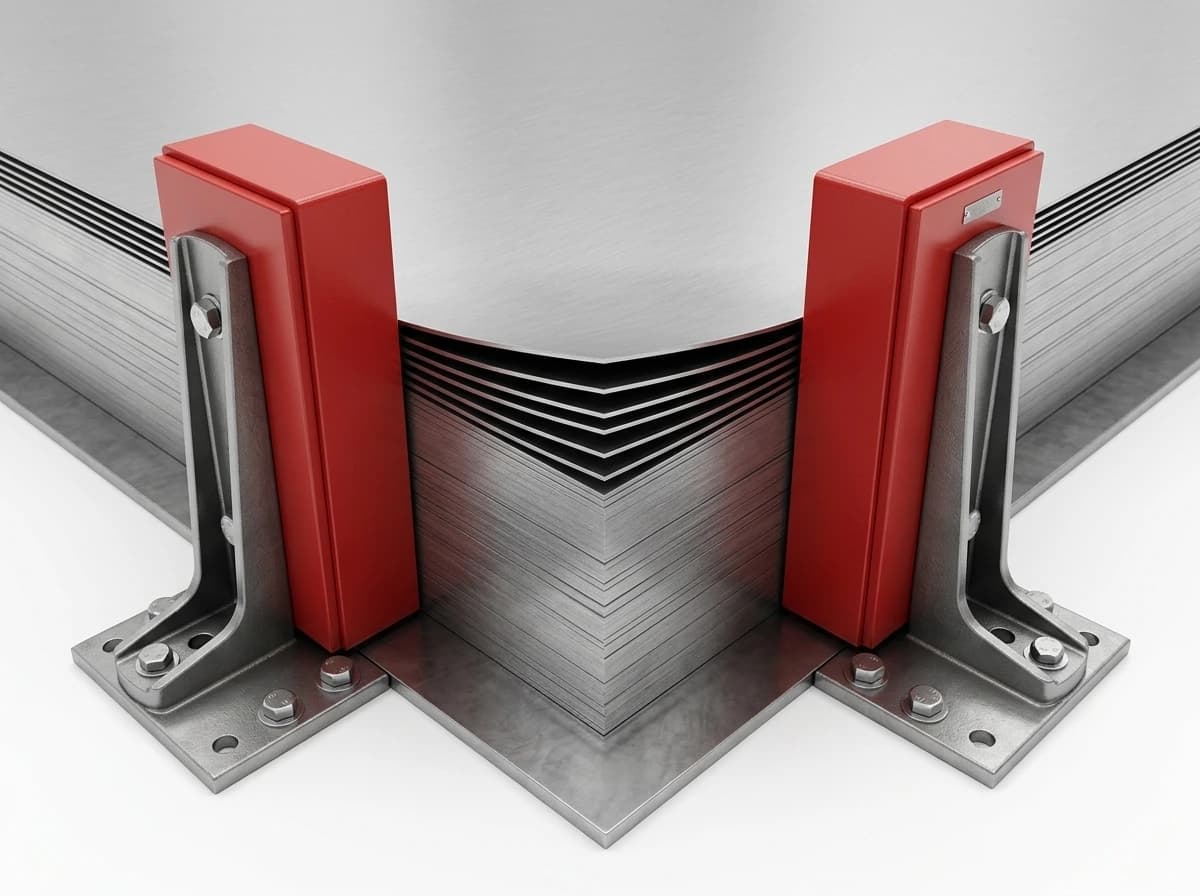
Sheet Metal Destacking Automation: Magnetic Grippers, Sheet Fanners, and Zero Double-Blank Prevention
Plan sheet metal destacking with magnetic grippers, sheet fanners and double-sheet detection. Compare tooling, prepare RFQs and define sample acceptance tests.
Engineering review: October 27, 2026. Scope: global applications using ferromagnetic steel blanks. Aluminum, copper and austenitic stainless steels require a different gripping and separation assessment. Local machinery requirements and the integrator's risk assessment remain separate from this application guide.
For sheet metal destacking automation, use magnetic sheet fanners to assist edge separation, magnetic grippers selected for the actual sheet gauge to lift the blank, and double-sheet detection (DSD) to check it before press feed. These perform three different jobs: separating, holding and verifying. None replaces the other two.
A second blank entering a press can damage tooling and stop production. Here, “zero double-blank” is an acceptance objective for a defined test and feed-control sequence, not a guarantee that a magnet will never lift two sheets. Prevention reduces double picks; detection and an interlocked feed decision contain the remaining events.
This guide is a source-based selection framework for manufacturing engineers, integrators and purchasing teams. It includes a proposed RFQ and acceptance method; it reports no first-hand production trial or measured cycle-time improvement. Start with the checklist below, or request a destacking application review with your blank drawing and operating conditions.
The Physics of Blank Clinging: Why Sheets Refuse to Separate
When investigating double picks, check the following interacting causes before increasing gripping force:
Check together: oil-film resistance, restricted air ingress, edge burrs and magnetic coupling.
These effects interact; this is a diagnostic checklist, not a sizing equation.1. Oil-Film Resistance and Restricted Air Ingress
Lubricant between broad, flat sheets can resist separation. Viscosity, temperature, film quantity, contact area and separation speed all matter. A sealed region may also resist pressure equalization until an edge opens. These effects are related; adding separate maximum force estimates can double-count the same pressure response. Obtain separation loads from representative stack trials rather than an assumed vacuum or a film formula without measured inputs.
2. Edge Burrs and Mechanical Interlocking
Burrs, warped corners and damaged edges can catch adjacent sheets. Record burr direction and stack alignment during a failed pick. Magnetic field adjustment cannot release a part that remains physically attached to a skeleton by micro-tabs.
3. Magnetic Coupling into Lower Sheets
A magnetic circuit can couple through a thin top sheet into underlying sheets. There is no universal penetration depth for an industrial magnet: pole geometry, material, sheet thickness, gaps and flux setting all affect the result. Increasing nominal holding force can therefore increase double-pick risk rather than solve separation.
Pillar 1: Magnetic Sheet Fanners (Edge Repulsion Engineering)
The first line of defense in automated destacking is the magnetic sheet fanner (also called a magnetic sheet separator). Installed along the sides or corners of the blank pallet, sheet fanners pre-condition the stack before the robotic EOAT makes physical contact.
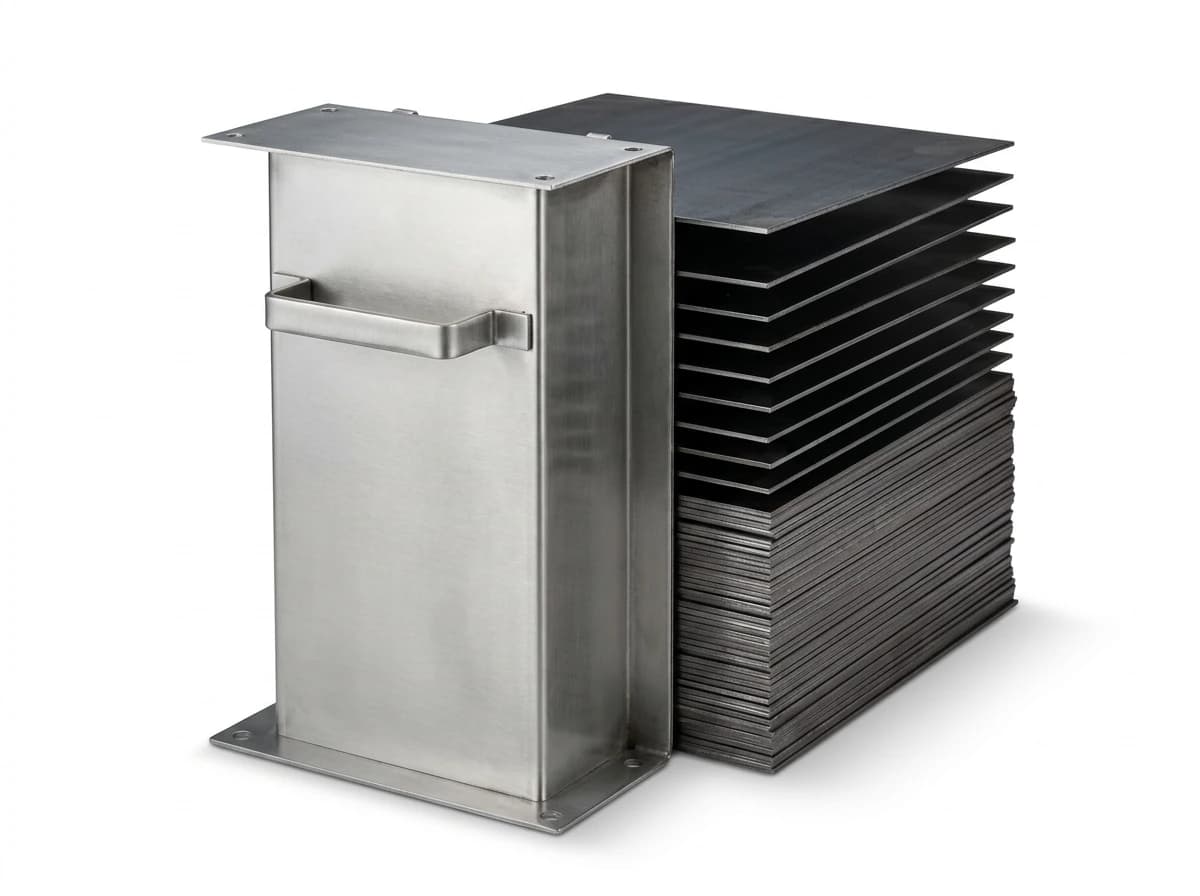
The Like-Pole Repulsion Principle
Storch's sheet-fanner overview explains that induced like polarity helps adjacent ferrous sheet edges repel. This can make an oily stack easier to separate, but the gap and number of sheets that fan depend on the application. The image above illustrates the arrangement; it does not document a measured separation result.
Fanner Architecture: Permanent, Pneumatic Retractable, or Electromagnetic?
Choosing the correct fanner actuation mechanism depends on the level of cell automation and blank cycle frequency:
| Fanner Architecture | Working Mechanism | Best Use Case | Operational Limitation |
|---|---|---|---|
| Fixed Permanent Fanner | A permanent magnetic assembly acts on the stack edge. | Stable blank outlines and a loading path with adequate clearance. | Magnetic attraction remains during stack exchange; confirm a controlled loading method. |
| Retractable or Switchable Fanner | The housing, internal magnet or magnetic circuit changes position, depending on the design. | Pallet shuttles and changing outlines that need clearance or reduced attraction. | Verify the actual mechanism, feedback and loss-of-air state. |
| Electromagnetic Fanner | An energized coil generates the separation field. | Applications needing controlled energization where the selected unit is suitable. | Check duty rating, heat, electrical supply and behavior on power loss. |
| Air-Assisted Separation | Air nozzles supplement magnetic edge separation. | Stacks that remain difficult to separate in representative trials. | Assess air use, noise and oil mist; air assist does not verify a single sheet. |
Engineering Sizing Rules for Fanner Placement
- Active stack zone: Ask the supplier for the applicable working zone. Confirm that the top sheet stays within it from a full pallet to the last blank, using stack-height tracking or a lift table where needed.
- Standoff and clearance: Set the working distance from the selected model's instructions and sample trial. Check stack skew and loading clearances; do not specify a universal millimeter gap.
- Location and number: Test side or corner locations against blank stiffness, available edge access and robot clearance. Record center sticking and corner behavior before adding more units.
Pillar 2: Shallow-Field Magnetic Gripper EOAT Engineering
While sheet fanners assist edge separation, the robotic end-of-arm tooling must grip and lift the blank. Excessive coupling into lower sheets can work against that separation and draw a second sheet toward the first.
One option to assess is a shallow-field magnetic gripper, qualified for the actual blank and stack.
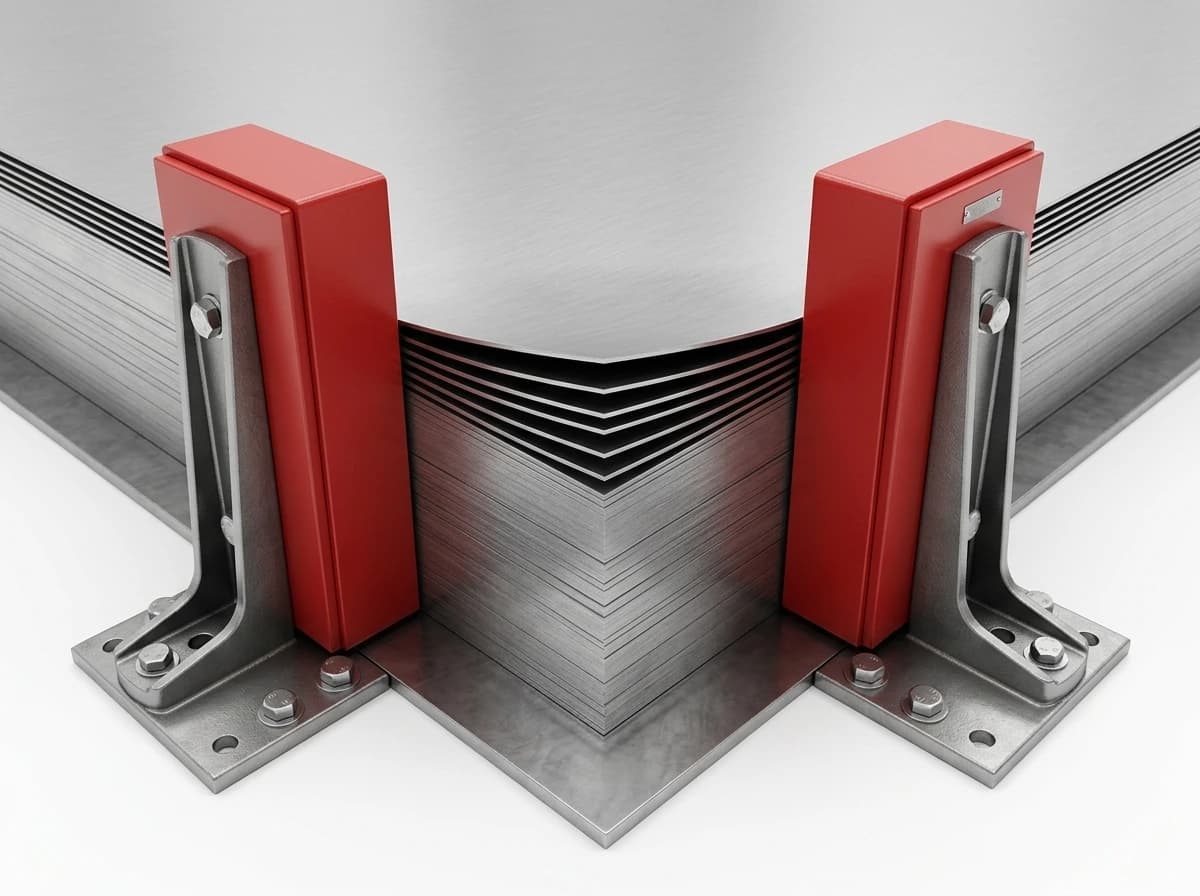
Flux Penetration Depth Control
Shallow-field tooling aims to limit coupling into lower sheets; it does not create a sharp field boundary at a stated depth. Pole layout and flux setting must provide enough holding force on the thinnest permitted blank while avoiding unnecessary attraction to the stack.
Magswitch's Variable Flux Output explanation documents adjustable magnetism for part selection. It is evidence of a control option, not proof that every EPM gripper offers variable flux or a particular sheet-gauge capability. Request force-versus-thickness data and test the chosen tool on both single blanks and the actual stack.
Electro-Permanent Magnet (EPM) vs. Pneumatic-Switched Permanent Magnets
EPM tooling changes magnetic state with an electrical pulse and can retain its holding state without continuous coil current. Switching time, release behavior and available feedback are model-specific. Residual magnetism in the released blank must be measured if it matters downstream.
Pneumatically switched permanent magnets move an internal magnet or magnetic circuit using compressed air. Schmalz's magnetic-gripper overview describes this principle for ferromagnetic workpieces. Verify required pressure and whether the selected tool retains its state after air loss.
Neither architecture alone establishes safe load retention: oily shear contact, minimum material thickness, stopping loads, mounting and the complete control circuit still require validation. Ask suppliers of electro-permanent magnetic grippers to state the conditions behind each force rating.
Kinematic Optimization: The Peeling Trajectory
A controlled edge peel can admit air progressively between sheets. It is an application trial option, not a universal angle or guaranteed percentage reduction in separation force.
- Contact: Bring the required poles into contact without pressing the stack into a mechanical jam.
- Retain the blank: Establish a verified grip using the tool manufacturer's permitted activation sequence. Do not assume a subset of modules can safely carry the whole blank.
- Trial a small edge lift: Choose tilt, compliance and speed within allowable bending and gripper side-load limits. Check for lower-sheet movement and pallet interference.
- Verify separation: Confirm a valid single-sheet DSD result before enabling press feed. Keep the sheet in the validated inspection position for the required measurement time.
- Transfer: Accelerate only within the proven holding and robot load envelope.
Pillar 3: Inline Double-Sheet Detection (DSD) Integration
Even with optimized fanners and shallow-field EOAT, production variations—such as bent blank corners, heavy sludge oil buildup, or burred slitting edges—can occasionally cause a mechanical hitch. An automated destacking cell requires an automated verification gate.
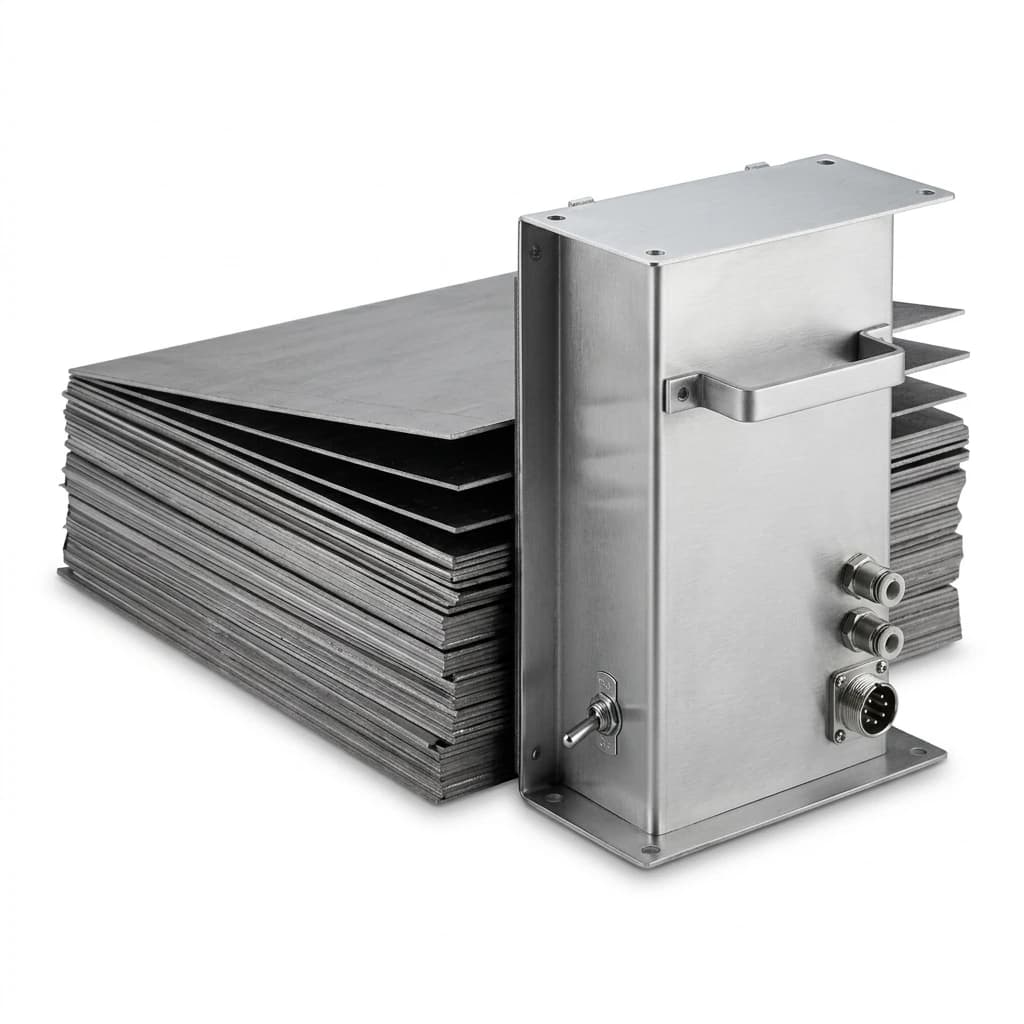
Illustrative separator arrangement, not evidence of a DSD measurement or an installed sensor configuration.
Sensor Operating Principles
ROLAND ELECTRONIC's double-sheet detection overview distinguishes single-sided systems for destacking from non-contact dual-head systems for pass-through inspection. Choose a sensor qualified for the material, thickness range and available mounting space.
- Single-sided measurement can be integrated near the EOAT, subject to the sensor's contact or standoff requirements. Check interference from gripper magnets and repeatability under motion.
- Dual-head measurement requires access to both sides and a validated pass-through path. Head alignment, sheet motion, working gap and measurement time remain relevant; the arrangement is not immune to vibration.
- Calibration must follow the selected system's instructions. Teach and challenge-test empty, single and deliberate double-sheet conditions for each material recipe. Do not assume all sensors report a linear thickness percentage or share one response time.
PLC Fault-Handling Sequence
The following is a proposed functional sequence for integrator review, not safety-rated control logic:
Pick -> measure in a validated position -> check current result and active recipe
  Valid single sheet + all cell permissives -> allow feed for this measured pick only
  Empty / double / invalid / stale result / sensor fault -> inhibit press feed
    Retain the load; move only along a validated recovery path
    Support the blank on the stack or a designated recovery fixture before release
    Retry separation only within an agreed retry limit, then measure again
    Persistent fault -> supported reject location, alarm and controlled intervention
Check lost communication, recipe mismatch and sensor disconnection as well as deliberate double sheets. A normal DSD output does not establish a personnel-safety function. Do not partially demagnetize or shake an unsupported load as a generic recovery step.
Comprehensive Technology Comparison: Destacking Solutions
When evaluating capital expenditure for a new press line or retrofitting an existing destacker, procurement teams must balance component costs against operational uptime, maintenance labor, and scrap risk.
| Evaluation Dimension | Vacuum Suction Cups | Conventional Electromagnet | Air Assist Alone | Application-Matched Magnetic Gripper + Fanner + DSD |
|---|---|---|---|---|
| Single-sheet verification | Needs a separate verification method; separation depends on cup layout and motion. | Can attract underlying sheets; needs verification. | Assists separation but cannot hold or count sheets. | Separates, grips and checks the pick in distinct stages; challenge-test the feed gate. |
| Oily blanks | Check cup material compatibility, sealing and shear retention. | Check contact gap, sliding and release behavior. | Assess oil mist and air demand during trials. | Oil still changes contact and separation; validate both retention and release. |
| Perforated parts | Usable where each required cup seals on solid land, or with suitable tooling. | Needs adequate ferromagnetic contact area. | Effect depends on edge access and airflow. | Needs adequate solid pole contact; joined micro-tabs remain a mechanical constraint. |
| Energy and utilities | Depends on pump or ejector choice, leakage and duty cycle. | Generally needs energized coils while holding; check model design. | Requires compressed air during operation. | EPM can hold without continuous coil power; include controller, pneumatic and sensor loads. |
| Power or air loss | Check valves, reserve volume and monitoring may support retention. | Check backup provisions and stopping behavior. | No load retention function. | Confirm magnetic state, oily shear grip and complete cell response; no blanket fail-safe claim. |
| Maintenance | Inspect cups, filters, hoses and seals for the actual duty. | Inspect pole faces, wiring and thermal condition. | Inspect nozzles and air preparation. | Inspect pole faces, fanners, cabling and DSD calibration; no universal service-life interval. |
| Cycle capability | Measure seal establishment, separation and release in the full cycle. | Measure switching, separation and release. | Does not define the transfer cycle by itself. | Include separation, measurement, transfer, release and fault recovery; obtain a tested cycle time. |
Engineering Selection & Sizing Checklist for Procurement Teams
Before finalizing an RFQ for magnetic destacking tooling, the automation engineer and procurement team should audit the following technical parameters:
1. Workpiece Metallurgy and Surface Condition
- Material grade: Confirm ferromagnetic response for every permitted grade and condition. Do not treat all stainless steels as magnetic.
- Thickness range: Supply minimum and maximum gauge, tolerances and any mixed-gauge risk. Request force data at the minimum gauge, not only on thick test plate.
- Surface condition: Include coating, roughness, flatness, burr direction and contamination. Determine gap-related derating from data or trials rather than a fixed coating allowance.
- Oil condition: Provide lubricant specification, application quantity, temperature range and wash status; retain worst-case sample blanks.
2. Stack and Pallet Presentation
- Stack geometry: Provide blank dimensions, full and depleted stack heights, pallet construction and permitted skew.
- Fanner access: Verify working distance, active zone and clearance using the selected model's instructions and the actual pallet.
- Stack-height tracking: Explain how the top sheet remains in the qualified pickup and fanning zone.
- Exchange sequence: Check pallet loading, last-blank pickup and the feedback required for any retractable unit.
3. Robotic EOAT Integration
- Robot load envelope: Include blank, EOAT, adapter, cables and sensors; assess center of gravity, wrist moments and stop loads.
- Contact and shear: Validate the smallest usable pole-contact area and oily sliding resistance on real blanks.
- Trajectory: Qualify peel, transfer and release without excessive sheet bending or unsupported loads.
- Controls and DSD: Specify recipe management, measurement timing, result freshness, feed permissives, retry limits and fault handling.
RFQ Specifications & Factory Acceptance Testing (FAT) Protocol
When soliciting quotes from custom magnetic tooling manufacturers, providing incomplete data results in oversized, heavy grippers or inadequate fanning performance.
Data Package to Include in Your RFQ
- Part drawings / CAD: Include gauge tolerances, cutouts, remaining micro-tabs, contact lands and center of gravity.
- Surface samples: Supply material, coating, lubricant and temperature information plus representative single sheets and stacks.
- Production targets: Define cycle time, transfer acceleration, orientation, stack changeovers and allowable recovery time.
- Interfaces: Supply the robot flange drawing, utility limits, controls interface and the proposed DSD mounting location.
Proposed Factory Acceptance Test (FAT) Protocol
Agree the test matrix and acceptance criteria before ordering. These are suggested contract inputs, not published industry standards or completed tests.
- Separation trial: Test agreed combinations of minimum/maximum gauge, oil condition, burr orientation and full/depleted stacks. Record raw double picks separately from double blanks incorrectly accepted for feed.
- Feed-gate challenge: Intentionally present empty picks, double sheets, sensor faults and wrong recipes. Acceptance requires that none of these challenges enables press feed; include recovery and result-reset behavior.
- Endurance example: A buyer might specify 1,000 consecutive picks per agreed recipe with zero double blanks accepted for feed. Log total picks, raw doubles, retries, rejects, false rejects and cycle time. This is an example target, not evidence that this system achieved it.
- Retention and stopping: Test the agreed motion and stop envelope with worst-case oily contact under a controlled procedure. Include loss of power or air as applicable; define acceptance with the integrator rather than assuming a universal acceleration rating.
- Release and residual field: Check release at the receiving fixture. If welding or chip attraction matters, agree the field limit, measurement locations and instrument procedure with the downstream process owner; no single Gauss limit guarantees all welding outcomes.
For context, under an idealized independent-trial model, zero observed failures in 1,000 trials gives a one-sided 95% upper failure-probability bound of 1 - 0.05^(1/1000), approximately 0.30% per trial. This arithmetic illustrates why a finite zero-event run cannot prove zero future failures. Correlated cycles and changing production conditions further limit the inference; the test does not establish a safety performance level.
Use the matrix above to compare quotations for robot magnetic grippers, requiring the same blanks and acceptance definitions from each supplier.
Frequently Asked Questions (FAQ)
Why do standard magnetic grippers pick up double blanks from sheet metal stacks?
Magnetic coupling can extend into underlying ferromagnetic sheets, while oil films and burrs can also pull a second blank along. Select tooling for the actual material and minimum sheet gauge, trial it on the stack, and verify each pick with double-sheet detection. A shallow-field label alone does not establish single-sheet performance.
How does a magnetic sheet fanner separate oily steel blanks?
A fanner induces like magnetic polarity in adjacent sheet edges, helping them repel and opening a gap for separation. Results depend on sheet stiffness, oil, burrs, stack geometry and fanner position. It assists separation but does not verify that the gripper has picked only one sheet.
When should we choose retractable sheet fanners over fixed fanners?
Consider a retractable or switchable fanner when stack exchange, pallet shuttles or changing blank outlines require extra clearance. Confirm the actual switching mechanism, position feedback and loss-of-air behavior with the supplier; a pneumatic connection does not by itself mean the whole housing retracts.
Can magnetic destacking handle perforated blanks or blanks with micro-tabs?
Perforations can be compatible when the poles have enough solid ferromagnetic contact area and the part is fully separated. Micro-tabs that still join a part to its skeleton must be cut or broken in a validated process before individual picking. Verify thin webs, flexibility and grip locations on sample blanks.
What robot motion helps reduce double-sheet pickup?
A controlled edge peel can admit air progressively between oily sheets. Choose motion, compliance and speed by trial within the robot and gripper limits; there is no universal peel angle or percentage reduction. Keep the blank retained, check clearance and verify a single sheet before press feed.
Can residual magnetism affect downstream welding or press tooling?
Residual magnetism may attract chips or affect a downstream welding process. Gripper release does not establish a demagnetized blank. Agree a residual-field limit and measurement locations with the downstream process owner, then measure after release; add a separate demagnetization step if required.
References and Authoritative Sources
Sources checked October 27, 2026. These are manufacturers' own technical or product pages. They support the mechanisms noted below; they are not independent comparative tests and do not substantiate universal force depths, cycle rates or failure probabilities.
- ROLAND ELECTRONIC — Double Sheet Detection. Supports the single-sided and dual-head system distinction and the role of double-sheet warnings in machinery protection.
- Magswitch — Variable Flux Output (VFO) Technology. Supports adjustable magnetism for selected tools and part-picking applications; does not specify a universal sheet-destacking depth or apply to every EPM architecture.
- Storch — Sheet Fanners and Magnetic Sheet Separators. Supports edge separation by induced like polarity in ferrous sheet stacks. Its application data is conditional on the stated test sheets. The former
/sheet-fanners/address redirects here. - Schmalz — Magnetic Grippers. Supports compressed-air actuation of a permanent magnet for ferromagnetic workpieces. Individual force ratings require their stated thickness and contact conditions.
Consult with Our Sheet Metal Tooling Engineers
For a sheet metal magnetic gripper application, send the blank dimensions, minimum gauge, material, lubricant, stack layout and target cycle time. These inputs help define suitable gripping, separation and verification options.
Request an engineering review of your destacking RFQ, including a proposed sample trial and acceptance matrix. Confirm any fanner or DSD supply scope, simulation availability and testing terms in the quotation.
Author

Categories
More Posts
High-Temperature Magnetic Grippers: Sizing and Procurement for Hot Forging
High-temperature magnetic grippers sizing guide for hot forging: compare EPM safety, payload derating, duty cycles, cooling options, and RFQ inputs for buyers.

Magnetic Gripper Residual Magnetism and Demagnetization
Guide for engineers and buyers on why parts stick to magnetic grippers, how active demagnetization works, and how to define release acceptance criteria.
Safety Compliance and Fail-Safe Mechanisms in Magnetic EOAT: ISO 10218-2 and PL Buyer's Guide
A buyer's guide for procurement and engineering teams specifying fail-safe electro-permanent magnetic grippers against ISO 10218-2 and ISO 13849-1 expectations.