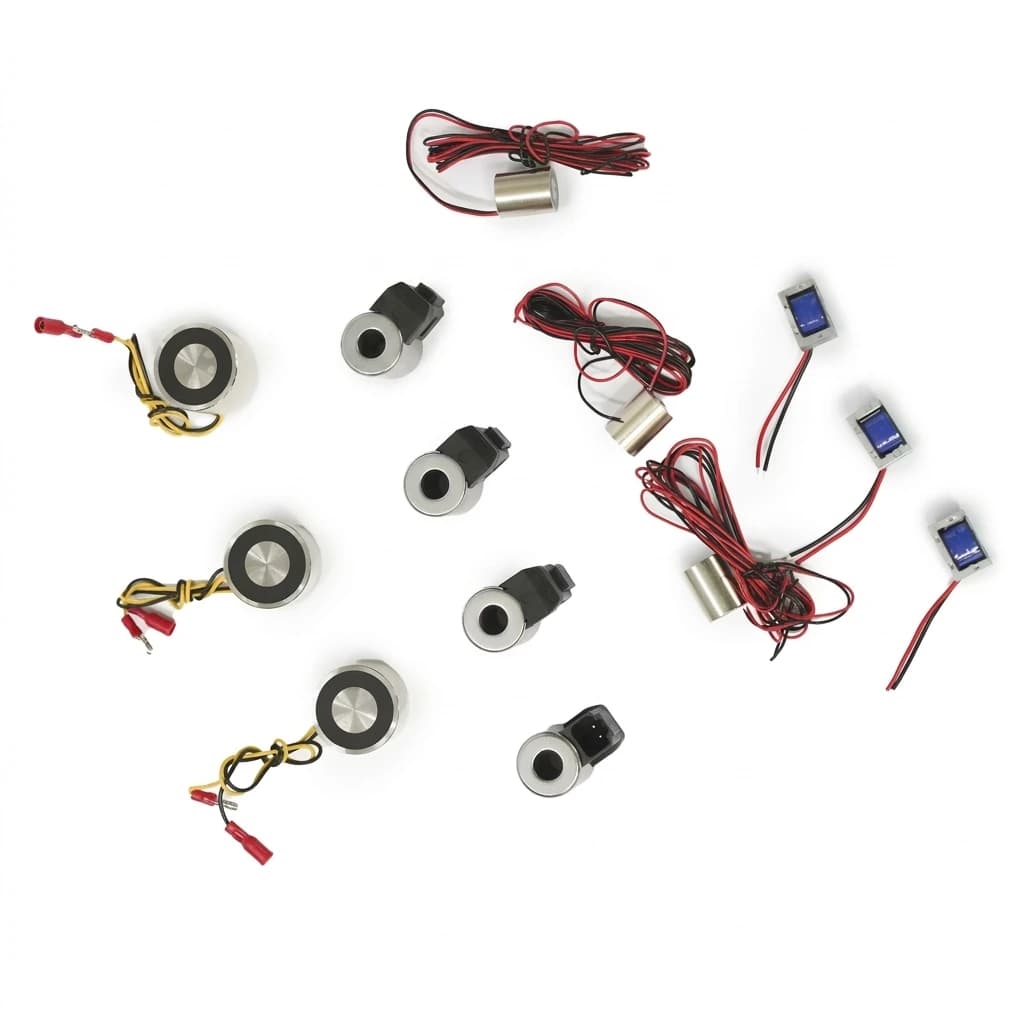
High-Temperature Magnetic Grippers: Sizing and Procurement for Hot Forging
High-temperature magnetic grippers sizing guide for hot forging: compare EPM safety, payload derating, duty cycles, cooling options, and RFQ inputs for buyers.
Robotic automation in hot forging, die casting, and hot stamping presents a severe challenge for end-of-arm tooling (EOAT). Vacuum cups melt, pneumatic mechanical grippers seize from heat expansion, and standard electromagnets lose their force and pose a catastrophic drop hazard during power outages. As manufacturers push for higher throughput and less human intervention in hazardous environments, the demand for robust, high-temperature magnetic gripping solutions has surged.
For procurement teams and process engineers, high-temperature magnetic grippers—specifically Electro-Permanent Magnet (EPM) technology—are usually the safest and most reliable solution when the workpiece must not release during a power-loss or E-stop event. However, specifying a high-temperature EPM requires calculating payload derating, understanding duty cycles, and ensuring safety requirements are met. This guide breaks down the physics of thermal degradation, the architectural differences between passive and active cooling, and the procurement criteria needed to specify a fail-safe automation line.
Scope and Assumptions (July 25, 2026)
This guide applies to global hot forging, hot stamping, and die-casting cells handling ferromagnetic steel billets, blanks, or stamped parts with a robot or transfer unit. It does not cover non-magnetic stainless grades, aluminum parts, mechanical tong design, or certified cell-level safety validation. Treat the temperature bands below as RFQ screening ranges, not final engineering limits: final sizing must be validated with representative parts, actual cycle-time data, and supplier thermal-soak testing.
For baseline EOAT context, compare a general robot magnetic gripper with the dedicated EPM architecture above before specifying high-temperature materials, shields, sensors, or cooling.
The Core Problem: Thermal Degradation of Magnetic Force
The fundamental limitation of any magnetic lifting device is the Curie Temperature. As the temperature of a permanent magnet rises, the thermal agitation of its atoms disrupts the alignment of its magnetic domains. This reduces the effective holding force. If the temperature exceeds the Curie point, the magnet permanently demagnetizes, rendering the tool completely useless. Even before reaching the Curie temperature, magnets experience a reversible loss of flux density.
Key Conclusion: You cannot use standard neodymium (NdFeB) magnetic grippers for hot forging applications. Evidence: Standard NdFeB magnets rapidly lose strength above 80°C (176°F). High-temperature grippers use Samarium-Cobalt (SmCo) or Alnico magnet formulations, which can maintain stability up to 350°C natively. Limitation: Even specialized high-temp magnets will experience a temporary force reduction of 20% to 50% at their upper thermal limits. Recommendation: Always derate the gripping force by at least 40% when calculating the payload for parts exceeding 200°C. Do not rely on nominal gripping forces stated for room-temperature conditions.
Safety First: Why Electro-Permanent Magnets (EPM) Should Be the Default
In high-temperature material handling, a dropped workpiece is not just a scrap cost; a 500°C steel billet falling onto a conveyor, sensor array, or cable tray causes immediate fires, molten slag splashing, and catastrophic equipment damage. If human operators are anywhere near the perimeter, the hazard severity multiplies exponentially.
Standard electromagnets drop their load immediately if facility power is lost or an emergency stop (E-Stop) is triggered. Because standard electromagnets require continuous electrical current to generate a magnetic field, the internal coils also generate their own internal heat, compounding the thermal stress of handling hot steel.
Electro-Permanent Magnet (EPM) technology should be the default choice whenever the risk assessment does not allow load release on power loss. EPMs use a short electrical pulse to reverse the polarity of internal reversible permanent magnets. Once magnetized, the gripper consumes zero power to hold the part. Even if the robot cell is completely powered down, the cables are severed, or a plant-wide blackout occurs, the EPM will not release the hot steel until specifically commanded with another electrical pulse. This intrinsically fail-safe nature reduces reliance on bulky backup battery systems on the robot arm.
Sizing and Sourcing: Decision Matrix
Comparing standard grippers to high-temp and water-cooled variants requires looking at the total cost of ownership (TCO), cycle times, and infrastructure requirements. Purchasing an over-engineered water-cooled system for an intermittent cycle wastes capital, while under-specifying a standard gripper for hot forging guarantees downtime. The same inputs also affect broader machine tending cell layout, cable routing, and guarding.
| Specification | Standard EPM | High-Temp EPM (Passive) | Water-Cooled EPM (Active) |
|---|---|---|---|
| Max Workpiece Temp | ~80°C | Supplier-rated 250°C - 350°C | Custom active-cooling range; validate thermal soak with supplier |
| Magnet Material | NdFeB (Neodymium) | SmCo / Alnico | SmCo + Cooling Jackets |
| Duty Cycle limit | Continuous (cool parts) | Intermittent (requires cooling time) | Continuous (active cooling) |
| Drop Risk on Power Loss | None (Fail-safe) | None (Fail-safe) | None (Fail-safe) |
| Infrastructure Needed | 24VDC / IO-Link | 24VDC / IO-Link | 24VDC + Chilled Water Line |
| Relative Initial Cost | $ | $$ | $$$ |
| Best Application Match | General pick & place | Hot stamping unload (low duty cycle) | Continuous forging press tending |
Understanding Duty Cycles and Thermal Soak
When dealing with hot parts, the nominal temperature of the workpiece is only half the equation. The other half is the duty cycle, which determines how much thermal energy actually transfers into the magnetic gripper's housing over time.
The Physics of Heat Transfer
Heat transfers from a hot forging billet to the magnetic gripper via three mechanisms:
- Conduction: Direct physical contact between the hot steel and the steel pole shoes of the magnet. This is the primary driver of thermal soak.
- Radiation: Infrared heat radiating from the glowing steel billet onto the face of the gripper, even when hovering closely before pickup.
- Convection: Hot air rising from the press bed and the part, heating the entire robot EOAT assembly.
Calculating the Duty Cycle
A gripper lifting a 400°C part for 5 seconds and then spending 55 seconds idling in ambient air has a very different thermal profile than a gripper lifting a 400°C part for 30 seconds with only a 10-second idle.
For passive high-temperature grippers (those using SmCo magnets and heat shields but no water cooling), the idle time is critical. The gripper relies on ambient air to dissipate the heat absorbed during the contact phase. If the cycle is too fast, the heat accumulates—a phenomenon known as thermal soak—until the internal temperature breaches the safe operating limit of the magnet material or the internal potting compound holding the coils.
Rule of Thumb: If the contact time with a >300°C part exceeds 30% of the total cycle time, passive cooling is likely insufficient, and active water cooling must be evaluated.
Active Cooling: The Water-Cooled EPM
When duty cycles are aggressive, such as in continuous press-tending where a robot feeds billets into a forging press every few seconds, passive cooling fails. The solution is the Water-Cooled EPM.
These specialized grippers feature internal channels or external cooling jackets through which chilled water continuously flows. This active loop absorbs the conducted and radiated heat, carrying it away from the sensitive internal magnets and resin potting.
While water-cooled systems can extend duty cycles beyond passive high-temperature grippers, they introduce integration complexities:
- Rotary Unions: If the robot wrist rotates more than 360 degrees, complex rotary unions are required to prevent twisting and rupturing the water lines.
- Leak Risks: In a hot forging environment, a ruptured water line can spray liquid onto molten or glowing steel, causing steam explosions. Armored, high-temperature hosing is mandatory.
- Chiller Units: A facility-level chilled water loop or a dedicated standalone chiller unit must be integrated into the work cell, adding to the initial capital expenditure (CapEx).
Real-World Failure Modes in High-Temp Gripping
Procurement teams should be aware of the common reasons why poorly specified magnetic grippers fail in hot environments, often resulting in warranty disputes and production halts.
1. Resin Potting Degradation
The internal copper coils of an EPM are encased in a potting resin to prevent vibration damage and electrical shorts. Standard resins melt or become brittle at around 120°C to 150°C. Even if the magnet material (like SmCo) can withstand 300°C, the gripper will short circuit and fail if the potting compound degrades. Always verify the temperature rating of the internal potting, not just the magnets.
2. Uneven Thermal Expansion
In a gripper housing built from multiple materials (e.g., aluminum body, steel pole shoes), high temperatures cause different rates of thermal expansion. Over thousands of cycles, this uneven expansion can warp the gripping face, creating microscopic air gaps. Because magnetic force drops exponentially with air gaps, a warped gripper will suddenly begin dropping parts.
3. Sensor Failure
Many modern EPMs include inductive proximity sensors to verify part presence, or temperature sensors to monitor internal heat. Standard inductive sensors fail around 85°C. High-temp applications require specialized PTFE-coated, high-temperature inductive sensors or remote fiber-optic sensing arrays mounted away from the heat zone.
Buyer Decision Points & Supplier Communication
When specifying a high-temperature EPM, purchasing managers must bridge the gap between process engineering and supplier capabilities. Key decision points include:
- Thermal Boundary Conditions: Do not just state "we handle 400°C steel." Specify if the environment itself (ambient temperature) is elevated, and what the precise cool-down cycle looks like.
- Payload & Safety Factor: Are you lifting a consistent 50kg billet, or does the payload vary? Suppliers need to know the worst-case scenario to calculate the correct derating factor.
- Integration Complexity: Active water-cooling adds significant CapEx and maintenance overhead. Communicate with your supplier to see if a passive high-temp EPM can survive your duty cycle before defaulting to water-cooled.
- Proof of Concept (PoC) Requirements: Request Finite Element Analysis (FEA) or real-world thermal soak testing data from the supplier before placing an order.
Hot Forging Procurement Checklist
Before sending a Request for Quote (RFQ) to a magnetic gripper supplier, ensure your engineering and maintenance teams have defined the thermal and operational boundaries. Providing vague specifications guarantees either an overpriced quote or an underperforming tool.
- Peak Workpiece Temperature: Document the absolute maximum temperature of the steel at the moment of pickup, not just the nominal furnace temperature. Parts cool rapidly in transit.
- Contact Time vs. Idle Time: Calculate the exact duty cycle in seconds. Specify the time the magnet is energized and in contact with the hot steel, versus the time it is idle in ambient air.
- Ambient Cell Temperature: The robot cell environment temperature affects passive cooling rates. If the ambient air is 50°C near the press, passive cooling will be severely handicapped.
- Workpiece Geometry & Thickness: Hot steel yields differently. Ensure the magnetic pole layout covers enough surface area to distribute the holding force. Thin, hot sheets require different pole pitches than thick, hot billets.
- Payload Margin (Derating): Have you applied a 40% to 50% safety derating factor to account for thermal flux loss?
- Coolant Line Routing: If specifying a water-cooled EPM, verify that the robot arm has internal or external routing capacity for the water lines without restricting motion or causing entanglement hazards.
- E-Stop Behavior: Verify in writing that the supplier's solution uses true Electro-Permanent (EPM) technology that holds the part indefinitely upon power loss.
The Role of Cobots vs. Heavy Industrial Robots
While collaborative robots (cobots) are increasingly popular, hot forging and stamping remain dominated by heavy 6-axis industrial robots (like FANUC, Yaskawa, or ABB) due to the extreme environments and heavy payloads. If the project uses ABB hardware, the ABB magnetic EOAT integration guide is a useful companion checklist for flange, payload, I/O, and validation inputs.
However, if you are attempting to deploy a cobot for unloading smaller hot parts (e.g., small cast automotive components), the weight of the gripper becomes a critical bottleneck. High-temperature EPMs, especially water-cooled versions with thick heat shields, are inherently heavy. This parasitic weight eats directly into the cobot's limited payload capacity. For cobot deployments, use a cobot gripper selection checklist before committing to high-temperature shields, custom-machined adapter plates, or external coolant routing.
Frequently Asked Questions (FAQ)
What is the maximum temperature a standard magnetic gripper can handle?
Most standard magnetic grippers are rated for workpiece temperatures up to 80°C (176°F). Exceeding this without heat shields or specialized internal magnets will cause rapid holding force degradation.
Can we just use a larger electromagnet to lift hot steel?
No. Electromagnets drop their load during a power failure, which is catastrophic with a 500°C steel billet. Electro-Permanent Magnets (EPM) should be the default choice when load release on power loss is unacceptable.
What happens when a magnet reaches its Curie temperature?
At the Curie temperature, the magnetic material permanently loses its magnetic properties. For neodymium, this is relatively low compared to samarium-cobalt (SmCo) or alnico alloys used in high-temp grippers.
Do we need active water cooling for every hot stamping application?
Not necessarily. If the contact time (duty cycle) is short and the robot idles long enough for air cooling, a supplier-rated high-temperature gripper may handle hotter parts intermittently. Water cooling becomes an RFQ requirement when passive cooling cannot keep the internal magnet, coil, sensor, and potting temperatures below supplier limits.
How much payload derating is required for hot parts?
Depending on the magnet formulation, a 20% to 50% derating factor should be applied when operating near the upper thermal limit of the gripper. A 100kg rated gripper might only safely handle a 50kg payload at 300°C.
Sources and References
To keep the procurement guidance auditable, the source URLs below were checked on July 25, 2026. Use supplier datasheets, drawings, and RFQ thermal test results before treating any temperature band as a contractual specification.
- Schmalz SGM-HP-HT Magnetic Grippers - Supplier reference for high-temperature magnetic gripper use and 350°C-class workpiece handling.
- Magswitch Heavy Lifting Solutions for Steel Handling - Supplier reference for magnetic steel handling, fail-safe lifting concepts, and production safety considerations.
- Magswitch Automation Tools - Supplier catalog context for magnetic automation tooling and EPM-based gripping applications.
Engineering Support and Next Steps
Selecting the right high-temperature magnetic gripper prevents catastrophic safety failures, operator injuries, and costly robot cell downtime. The wrong choice can lead to permanent magnet degradation within a single production shift, turning an expensive automation tool into scrap metal.
If you are automating a hot forging press, die-casting unload, or high-temperature stamping line, do not guess on thermal derating and duty cycles. Contact our engineering team with your workpiece temperature, part geometry, and precise cycle times. We will model the exact EPM pole layout, calculate the thermal soak, and determine whether your project requires passive heat shields or a fully active water-cooling loop.
Author

Categories
More Posts
Magnetic Gripper Residual Magnetism and Demagnetization
Guide for engineers and buyers on why parts stick to magnetic grippers, how active demagnetization works, and how to define release acceptance criteria.
Safety Compliance and Fail-Safe Mechanisms in Magnetic EOAT: ISO 10218-2 and PL Buyer's Guide
A buyer's guide for procurement and engineering teams specifying fail-safe electro-permanent magnetic grippers against ISO 10218-2 and ISO 13849-1 expectations.
Smart Magnetic Grippers: IO-Link Integration and Procurement TCO
Evaluate smart magnetic grippers with IO-Link for TCO, wiring, diagnostics, and RFQ scope. Use the checklist before choosing standard or smart EPM tooling.